There is no faith which has never yet been broken, except that of a truly faithful dog.
~ Konrad Lorenz
Mission Statement
German Shepherd Rescue of the Rockies (GSROR) serves the public as a non-profit organization dedicated to the rescue of homeless and abandoned German Shepherd Dogs (GSD) in Denver, Colorado and surrounding areas. While providing loving and temporary care, the goal of German Shepherd Rescue of the Rockies is to find well-matched, carefully-screened, permanent homes and families for each dog. As a community resource, we provide nutrition information, referrals, education, and other services.
Foster Homes Needed
We are a newly formed rescue and are in immediate need of foster homes. Please click on the Fostering Guidelines for more information about our foster program. Some of our dogs come to us with behavioral issues, so we have found that previous experience with German Shepherds is helpful. If you have the desire and the interest, but are not familiar with German Shepherds, we ask that you fill out the application. Regardless of your experience with this particular breed, our dogs need good foster homes. We hope to soon have a program available to educate future foster and adoptive parents about the breed and provide training tips.
We want to thank you for your interest in helping GSROR by opening up your homes, families, and hearts to help a dog in need. Rescues would not exist if not for the thoughtful time and generosity of foster parents.
Tracey’s Training Tips
The Name of the Game is Impulse Control
Click here to see all of Tracey’s Tips
(For ease of explanation, I will be using male gender pronouns when describing “your” dog)
In honor of this time of year when the vast majority of us have been trying not to overindulge in the holiday goodies, I decided to share several of the many, fun impulse control games you can play with your dog. Learning impulse control is a wonderful way for your dog to develop the skills and mental ability to control his actions, to look to you for guidance before making a decision, and to lower the level of his arousal when he gets excited. These games can also be the foundation work for training “leave it.” The games progress in increasing difficulty, so feel free to start wherever your dog needs work and move on once your dog “gets” it.
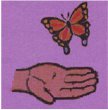
The first game begins with putting a yummy treat in your hand and closing it, then putting your hand near your dog’s nose and holding it very still. If this is new to your dog, he will probably try to lick, nibble and nudge your hand to get the treat out. Keep very still, however, and the second your dog pauses from his actions, say “yes” (or click), and open your hand to let your dog get the treat. Keep doing this until he no longer tries to get the treat (controls his impulses) and just stands there waiting for you to open your hand. You can increase the difficulty by not giving him the treat until he looks up at you.
In the next game, put a treat in each hand and close them. Let the dog sniff both hands, so he knows that treats are inside. Now, pull your hands apart, keeping them down at his level, as if you have airplane wings. Your dog will probably go from one hand to the next sniffing and maybe trying to get the treats. As before, keep your hands still and once he stops trying to get at the treat in either hand, or even better, stops and looks up at you, (again, controlling his impulses) say “yes” and give your dog the treat from the hand is furthest from him. Now, the next game requires that your dog is on leash. Toss a treat just out of reach of your dog and hold tight to the leash, in case he lunges to try to get the treat on the ground. Stand firm. The very moment your dog stops pulling on the leash and has a more upright body stance (indicating that he is controlling his impulses), say “yes” and give him a different treat from your hand. Keep repeating the process until he stops trying to get the treat all together. Then, you can try walking closer to the treat and do the same process. You can make it even more difficult by walk around multiple treats on the ground.
The ideal scenario is that the dog actually starts to look at you for guidance when he encounters something that interests him. Highly reward this behavior from your dog! This new ability to control his impulses will translate with just a little work to other situations, such as waiting for a meal or waiting to go outside or waiting to get out of the car, and so on. One final note, my personal training preference is that you never allow your dog to pick up any food you drop on the ground. Instead, you should pick up the food and hand it to your dog. This way, there is never any confusion for the dog about what he can pick up himself and what he should never touch. They cannot necessarily tell the difference, say, between a treat and a prescription pill that just fell on the floor. I also think it is always good to instill in your dog that all good things, like treats and rewards, come from you. After all, you want to be as important in your dog’s life as he is in yours.
Remember to have fun with it! Dogs love learning new things!
‘Tracey’s Training Tips’ Copyrighted 2011. Tracey Derheim. All Rights Reserved.